Pharma Trends 2026: What's Shaping the Future of the Pharmaceutical Industry
Pharma trends shaping 2026 are reshaping how companies engage healthcare professionals, develop commercial strategies, and integrate AI in healthcare.
From pharma digital transformation and medical affairs trends to pharma commercial excellence and new pharmaceutical marketing trends, organizations are moving beyond experimentation and redesigning how they operate.
These trends are based on keynote sessions, executive panels, and discussions held during NEXT 26 in Dubrovnik.
This is where more than 400 pharmaceutical leaders from over 30 countries, alongside 100+ speakers and 30+ sponsors and partners, explored the future of AI, HCP engagement, medical affairs, and commercial transformation.
Here are the biggest pharma trends shaping 2026.
What are the biggest pharma trends in 2026?
Based on keynote sessions, executive panels and discussions with pharmaceutical leaders at NEXT 26 in Dubrovnik, the biggest pharma trends in 2026 are AI operating models, connected customer engagement, trust, intelligent content, cross-functional collaboration, and outcome-focused transformation.
While AI dominated many industry conversations over the past two years, the discussion has evolved. Pharmaceutical companies are no longer asking whether they should adopt AI—they are asking how to integrate it into everyday operations, governance, and decision-making.
At the same time, organizations are shifting from isolated digital initiatives toward connected experiences that bring together medical, commercial, market access, and patient engagement.
Pharma Trends 2026 at a glance
- AI becomes an operating model.
- Trust becomes the new competitive advantage.
- HCP engagement becomes continuous.
- Medical Affairs become strategic.
- AI powers content intelligence.
- Commercial and Medical operate together.
- Success is measured by outcomes.
- Change management becomes more important than technology.

Why is AI becoming an operating model instead of just another tool?
AI is becoming an operating model because it is increasingly embedded into workflows, decision-making, and content creation rather than being used as a standalone application.
The era of AI experimentation is ending. Instead of deploying isolated AI solutions, leading pharmaceutical organizations are redesigning workflows around agentic AI, orchestration layers, and human oversight.
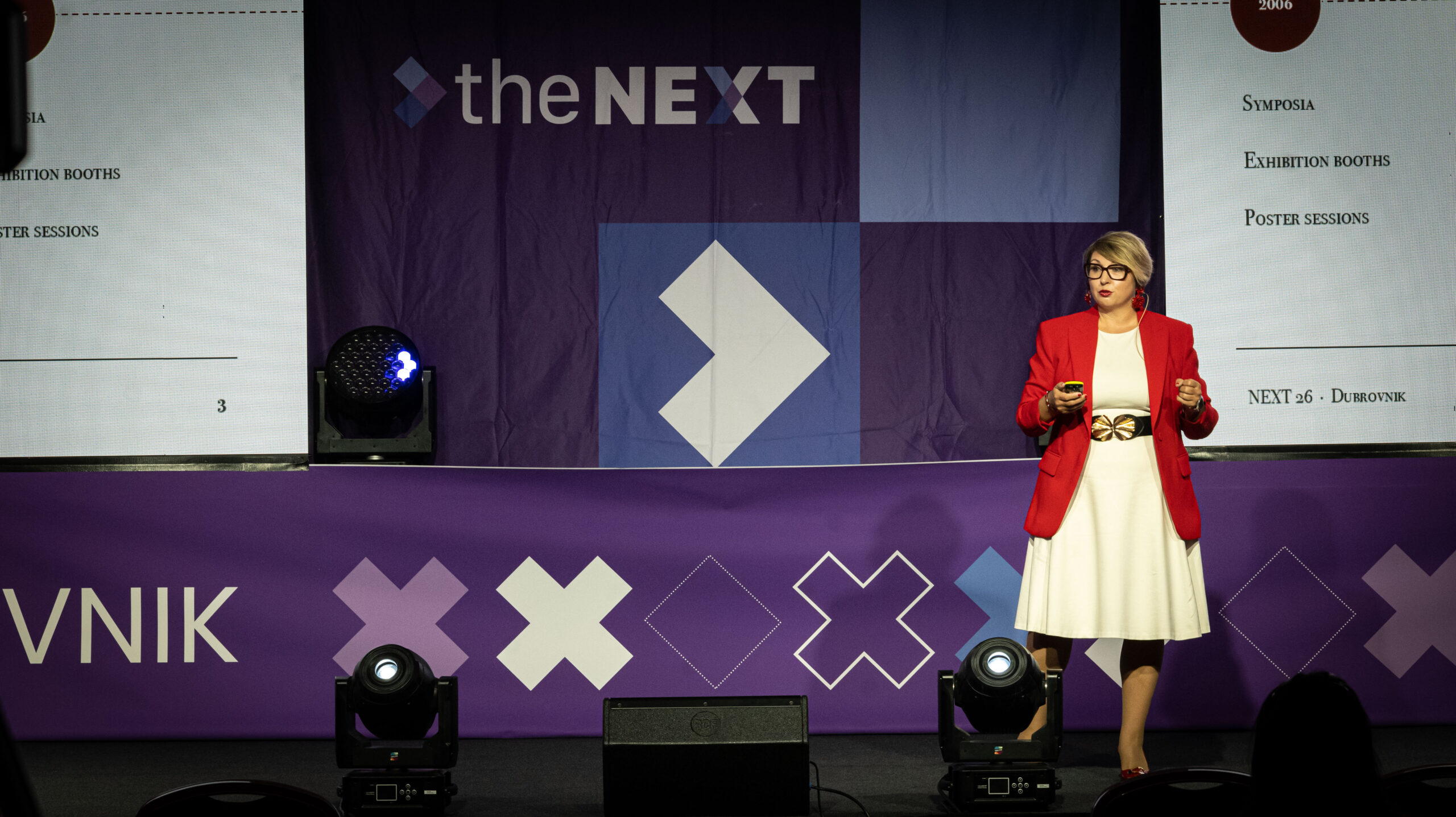
As Stefan Miljković highlighted in From Pilot to Production: Scaling Agentic Workflows in Pharma: “successful AI adoption depends less on deploying new technologies and more on redesigning workflows, reducing friction, and embedding AI into everyday ways of working.”
Success will depend less on having the newest AI platform and more on integrating AI into existing business processes with clear governance and accountability.
Why is trust becoming pharma's biggest competitive advantage?
Trust is becoming pharma's greatest competitive advantage because AI makes reliable, transparent, and evidence-based communication more important than ever.
As healthcare professionals increasingly rely on digital channels and AI-powered search, credibility has become the currency of engagement.
The importance of trust was a recurring theme throughout NEXT 26. In DE·CODED: Curiosity, Literacy, and the New Language of Health, Stefani Klaskow and Lois Gregory from Google, described trust as the “foundation of AI-enabled healthcare communication”, while Cristina Finazzi reinforced that “physicians continue to value trusted human interactions alongside digital innovation.”
Organizations that produce trustworthy scientific content, maintain regulatory excellence, and communicate transparently will stand out in an environment where misinformation spreads quickly and confidence is difficult to earn.
How is HCP engagement changing in 2026?
HCP engagement is shifting from campaign-based interactions to continuous, personalized, and AI-supported experiences.
Healthcare professionals increasingly expect relevant information when and where they need it—not generic campaigns delivered through disconnected channels.
This requires pharmaceutical companies to combine AI-driven insights with omnichannel engagement, creating experiences that adapt to each healthcare professional's preferences while maintaining scientific accuracy and compliance.
Why is cross-functional collaboration becoming essential?
Cross-functional collaboration is becoming essential because customers experience one pharmaceutical company, not separate commercial, medical, and market access teams.
Many organizations still operate in silos, creating fragmented customer experiences and duplicated effort.
Future-ready companies are aligning KPIs, sharing data, and building integrated operating models that enable medical, commercial, digital, and market access teams to work toward common business and patient outcomes.
Why is content intelligence replacing content production?
Content intelligence is replacing content production because creating more content no longer delivers better engagement.
Most pharmaceutical companies already have vast amounts of content, but much of it is difficult to find, localize, approve, or reuse.
AI is helping organizations create modular, searchable, and reusable content ecosystems that improve efficiency while reducing regulatory bottlenecks through smarter review and approval processes.
What are the biggest medical affairs trends in 2026?
The biggest medical affairs trends in 2026 are AI-powered insights, evidence-led decision-making, cross-functional collaboration, and a growing strategic role in improving HCP engagement and patient outcomes.
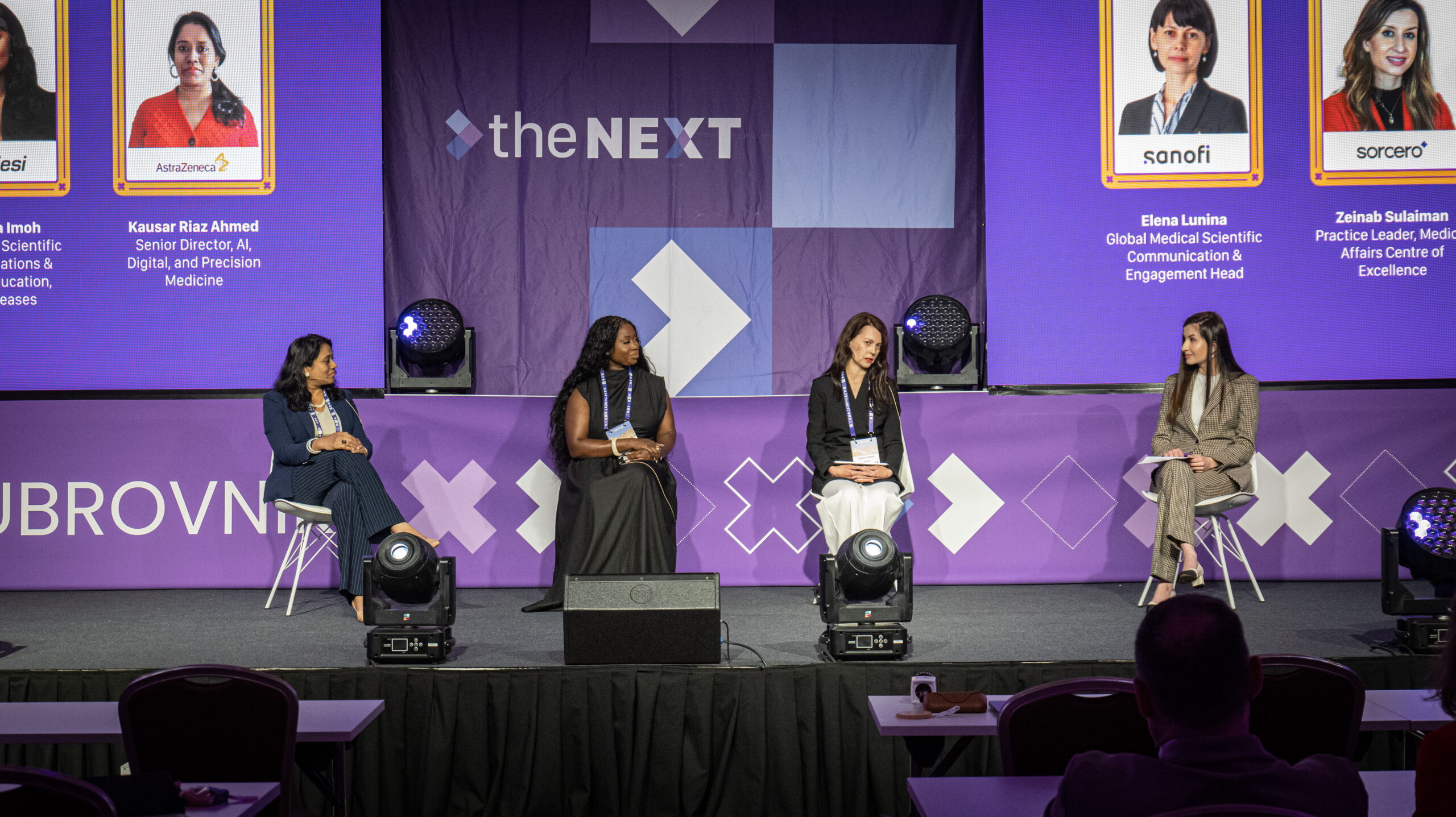
One of the biggest medical affairs trends in 2026 is the shift from scientific support to strategic leadership. As AI in healthcare becomes embedded across organizations, medical affairs teams are evolving into evidence partners that connect commercial, clinical, and digital functions.
The evolving role of Medical Affairs was discussed by Elena Lunina, Zeinab Sulaiman, Ezinneka Imoh, and Kausar Riaz Ahmed in AI, Insights, and Intuition: Who Really Runs Medical Affairs Now?, alongside Maaike Addicks in Medical Affairs: The Strategic Advantage.
Together, they highlighted how AI enhances evidence generation while scientific expertise remains essential for judgment and strategic decision-making.
Rather than replacing scientific expertise, AI enables medical affairs professionals to focus on higher-value activities that require critical thinking, empathy, and clinical judgment.
Why are pharma companies focusing on outcomes instead of engagement metrics?
Pharma companies are shifting from measuring activity to measuring decisions, behavior change, and patient outcomes.
Traditional metrics such as email opens, clicks, and content volume reveal little about whether healthcare professionals changed prescribing behavior or whether patients received better care.
Leading organizations are replacing vanity metrics with outcome-based KPIs that better reflect business performance and patient impact.
What should pharma leaders prioritize in 2026?
Pharma leaders should prioritize workflow redesign, trust, change management, and human-AI collaboration before investing in more technology.
Technology alone will not transform pharmaceutical organizations.
The companies that succeed in 2026 will simplify processes before automating them, invest in employee adoption, strengthen governance, and ensure AI supports—not replaces—human expertise.
The future belongs to organizations that combine intelligent technology with connected teams and a relentless focus on delivering value for healthcare professionals and patients.
The biggest shift isn't AI adoption—it's organizational redesign. Most pharma companies already have access to similar AI technologies. Competitive advantage will come from redesigning operating models around AI, not from choosing different AI tools.
Want a deeper dive into the discussions behind these trends?
Read our NEXT 26 Impact Report or watch the keynote sessions on the official NEXT Pharma Summit YouTube channel.
Conclusion
The defining characteristic of leading pharmaceutical organizations in 2026 will not be how much AI they deploy.
It will be how effectively they combine AI, scientific expertise, trusted relationships, and cross-functional collaboration into operating models that improve outcomes for healthcare professionals and patients.
Join us at an upcoming Next Pharma Summit events to hear pharmaceutical leaders discuss the trends shaping the future of the industry.
FAQ - Pharma trends 2026
What is the biggest pharma trend in 2026?
The biggest pharma trend in 2026 is the shift from AI as a standalone tool to AI as an integrated operating model that supports decision-making, customer engagement, content creation, and business operations across the pharmaceutical industry.
How is AI changing the pharmaceutical industry?
AI is transforming the pharmaceutical industry by automating workflows, accelerating content creation, improving HCP engagement, generating medical insights, and supporting faster, data-driven decision-making while maintaining human oversight and regulatory compliance.
What is agentic AI in pharma?
Agentic AI in pharma refers to AI systems that can independently perform complex tasks, coordinate workflows, analyze data, and recommend actions while operating within governance frameworks and supporting human decision-making.
Why is trust important in pharmaceutical engagement?
Trust is essential in pharmaceutical engagement because healthcare professionals and patients rely on accurate, transparent, and evidence-based information when making clinical and treatment decisions, especially as AI-generated content becomes more common.
How is HCP engagement evolving?
HCP engagement is evolving from campaign-based communication to continuous, personalized, omnichannel experiences powered by AI, real-time insights, and relevant scientific content delivered at the right moment.
Will AI replace people in pharma?
AI will not replace people in pharma because human expertise remains essential for scientific judgment, strategic decision-making, regulatory oversight, and building trusted relationships with healthcare professionals and patients.