Medical education is everywhere—webinars, articles, videos, endless streams of content. But one question remains: is any of it actually changing clinical practice?
For years, success has been measured in clicks, views, and attendance. Yet none of these metrics guarantee better decisions at the bedside or improved patient outcomes. The gap between consuming information and applying it in real life is still wide—and often overlooked.
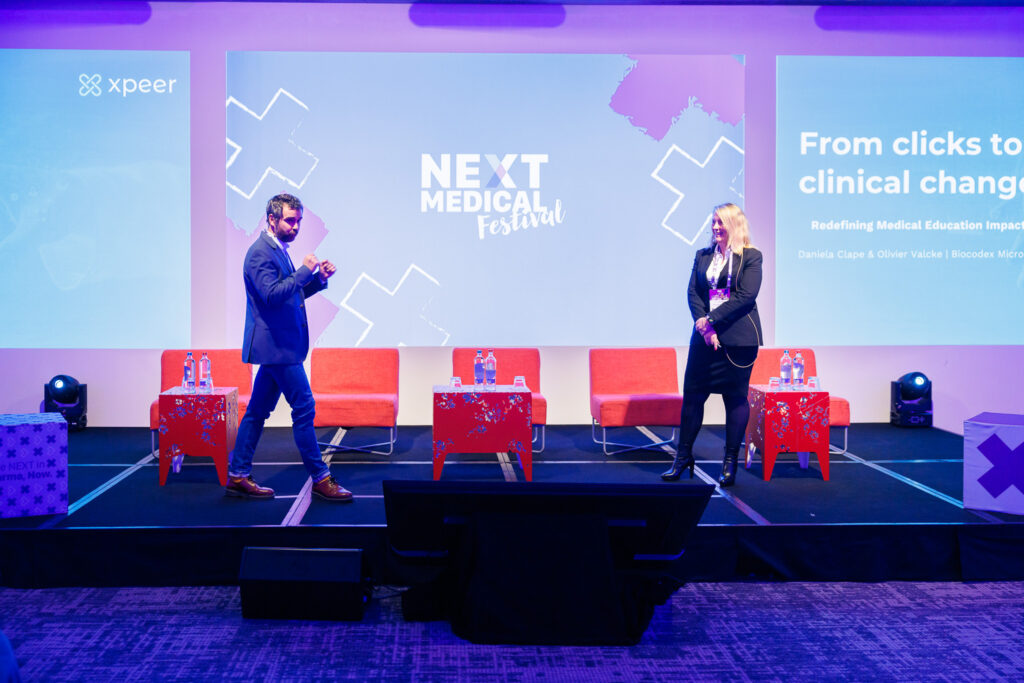
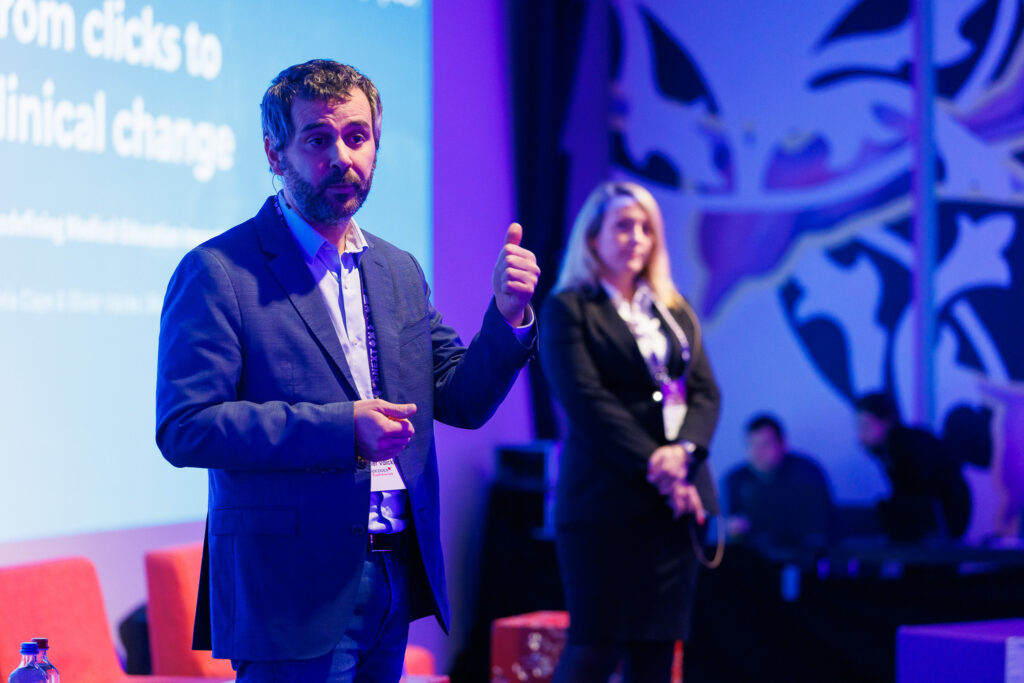
A recent session at NEXT Medical Festival highlighted this challenge in a simple but powerful way. Olivier Valcke and Daniela Clape highlighted that even as awareness of the microbiome grows, true understanding—and more importantly, clinical application—lags behind.
Healthcare professionals are exposed to more knowledge than ever before, but translating that knowledge into action remains the real test.
This is where modern medical education must evolve: from delivering content to driving measurable clinical change.
Why isn’t awareness enough in medical and healthcare education?
Today, the healthcare industry generates massive amounts of educational content. But too often, success is measured using superficial metrics—clicks, views, registrations.
The uncomfortable truth?
Clicks don’t treat patients.
For years, medical education has relied on what can be called “vanity metrics.” While these numbers may indicate visibility, they say little about real-world impact. Did the physician learn something new? Did they change their clinical behavior? Did patient outcomes improve?
These are the questions that truly matter—and they require a different approach.
How Medical education improve clinical practice in real-world settings?
Understanding how medical education improves clinical practice requires focusing on application, not just information.
Key indicators include:
- Completion rates – Are healthcare professionals finishing courses?
- Time spent – Are they deeply engaging with the content?
- Knowledge lift – Did learning actually occur?
- Intent to change – Are participants motivated to adjust their practice?
- Behavioral follow-up – Did they implement those changes over time?
This shift reflects a broader truth: changing clinical behavior is hard. It requires repetition, trust, and relevance. Research suggests it takes multiple exposures—often seven or more—for a message to truly stick.
The Microbiota Case Study: Turning Insight into Action
A powerful example of this new approach comes from a global microbiota initiative.
The starting point was simple: understand what people actually know about microbiota. A large-scale international survey revealed a striking insight:
- 71% of people had heard of microbiota
- But only 23% could accurately define it
This gap between awareness and understanding has real consequences. For instance:
- Only 2 in 5 patients reported receiving explanations about microbiota from healthcare professionals
- While 73% knew antibiotics affect microbiota, very few were informed about this by their doctors
In other words, information exists—but it isn’t consistently reaching clinical practice.
Why is measuring the impact of medical education essential?
Measuring the impact of medical education is the only way to understand whether learning leads to real change.
To address this, a multi-channel medical education strategy was deployed, built on three key pillars:
1. Accessibility
Healthcare professionals need content that fits into their daily routines. Microlearning—short, on-demand modules—proved essential.
2. Credibility
Accredited, scientifically validated content builds trust. In an era of misinformation, authority matters more than ever.
3. Community
Bringing together experts, practitioners, and learners creates a shared ecosystem where knowledge can spread and evolve.
The result? A growing global community of nearly 10,000 healthcare professionals engaging with microbiota education.
What results show real clinical behavior change in healthcare?
Unlike traditional campaigns, success wasn’t measured by clicks. Instead, the focus was on meaningful engagement:
- 86–87% course completion rates
- Average watch time: 37 minutes per session
- Knowledge increase: +17%
- High satisfaction scores (4.6/5)
- Strong intent to change clinical practice
These numbers point to something deeper than attention—they reflect behavioral influence.
And in some cases, the impact goes even further. In the context of endometriosis, improved education has contributed to reducing diagnostic delays—historically as long as 10 years—by several years. That’s not just a metric. That’s a tangible improvement in patient lives.
How can medical education in Europe drive real clinical change?
Today’s digital landscape is saturated with health advice—especially on topics like gut health. Platforms like social media amplify both accurate information and misleading trends.
This is where medical education plays a critical role:
bringing science back into the conversation.
When education is continuous, measurable, and evidence-based, it becomes more than information delivery—it becomes a driver of better clinical decisions.
Conclusion: Beyond Visibility
The future of medical education lies not in reaching more people, but in changing what they do next.
It requires:
- Moving beyond vanity metrics
- Designing for real-world application
- Measuring long-term behavioral change
Because at the end of the day, the ultimate KPI isn’t clicks or views.
It’s better conversations between doctors and patients.
It’s faster diagnoses.
It’s improved health outcomes.
And that’s the kind of impact worth measuring.
FAQ - Medical Education to Clinical Practice
1. What is medical education?
Medical education refers to training and learning activities that help healthcare professionals improve their knowledge and clinical skills.
2. Why is measuring clinical impact important?
Because engagement metrics like clicks don’t show whether doctors actually change their practice or improve patient outcomes.
3. What are better alternatives to click-based metrics?
Metrics like completion rate, knowledge improvement, and behavior change provide a clearer picture of real impact.
4. How does medical education improve clinical practice?
By delivering relevant, evidence-based content that physicians can apply directly in patient care.
5. What is the biggest challenge in medical education today?
Closing the gap between knowledge and real-world clinical application.