Omnichannel vs Multichannel in Pharma: What's the Real Difference?
Pharma companies still use "omnichannel" and "multichannel" interchangeably, and that confusion is a big part of why so many digital transformation efforts underdeliver.
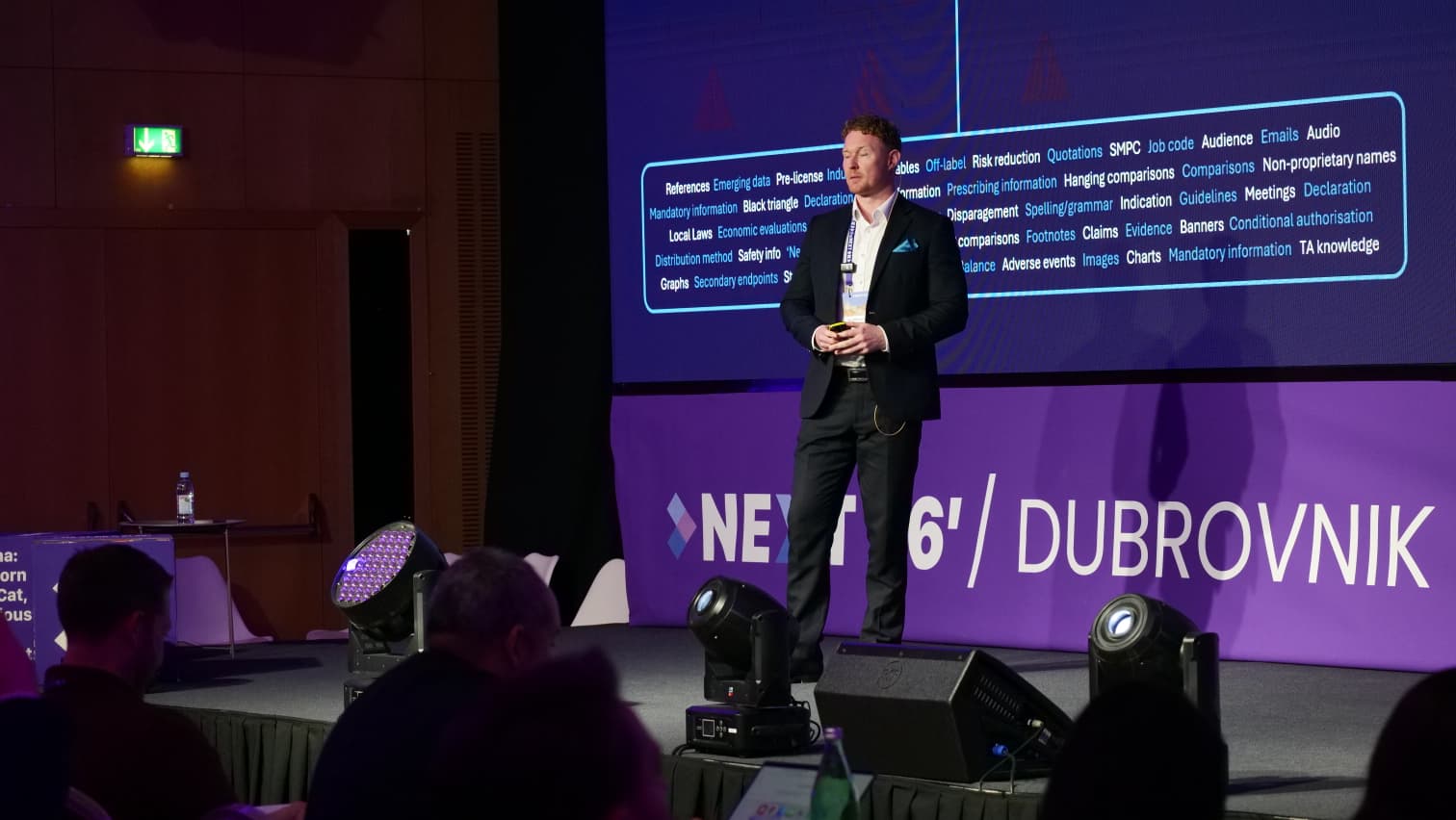
At NEXT 26' Dubrovnik, one of the most repeated ideas across the main stage was that the industry's future depends on moving from fragmented activity to orchestrated engagement — and that shift starts with understanding what actually separates these two models.
What Is Multichannel Marketing in Pharma?
Multichannel marketing in pharma means running several channels — email, rep visits, congresses, CRM campaigns — at the same time, without connecting the data or decisions behind them.
Each function (medical, commercial, access) typically owns its own channel, calendar, and metrics, so an HCP might receive a rep visit, an email, and a congress invite that have no relationship to one another.
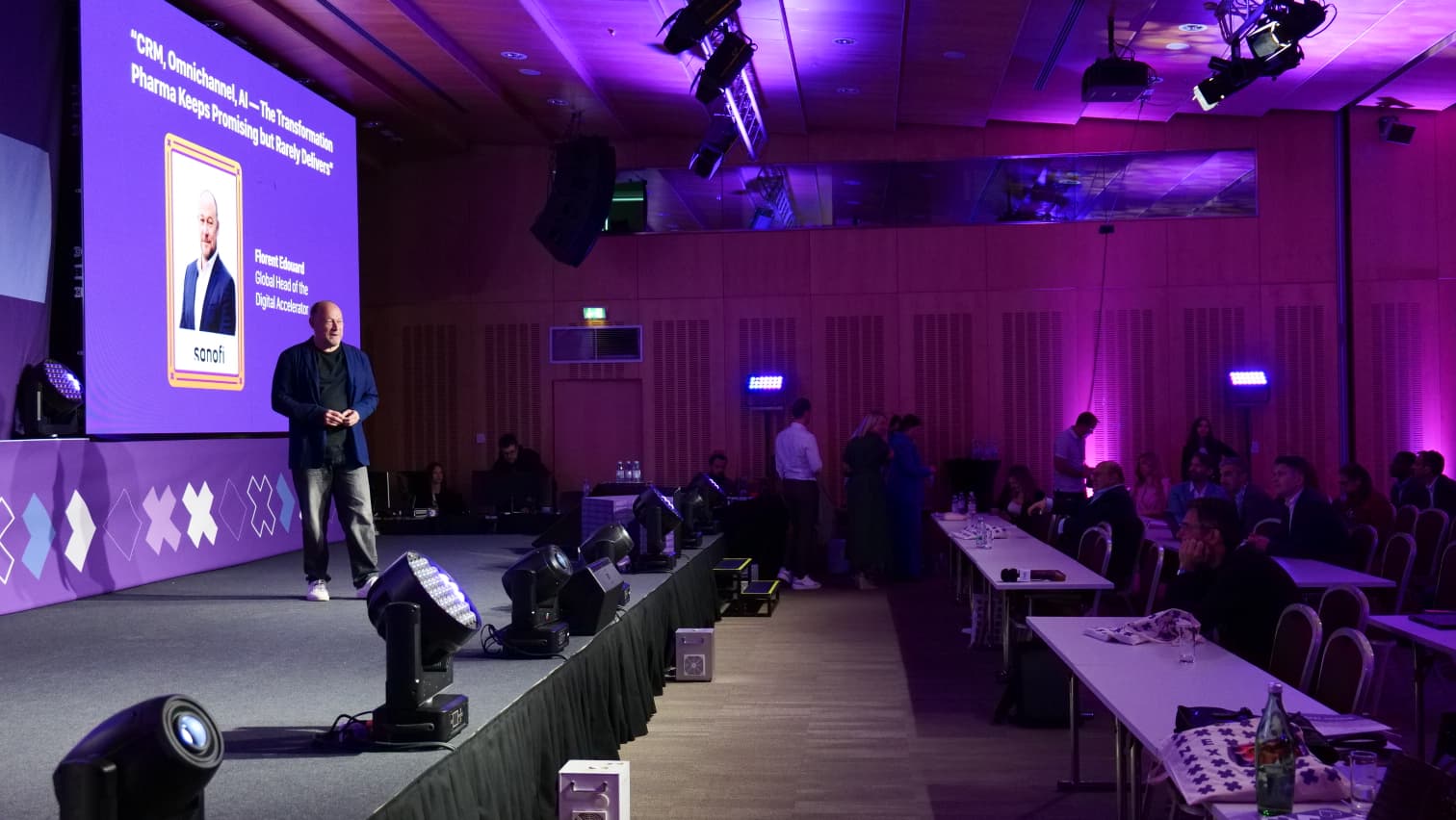
At NEXT 26', Florent Edouard's session "CRM, Omnichannel, AI — The Transformation Pharma Keeps Promising but Rarely Delivers" named the root causes directly: procurement waste, consulting obsessions, pilot mania, and data silos. The result is disengagement, not efficiency.
Why Does Multichannel Fail to Engage HCPs?
Multichannel fails to engage HCPs because it optimizes for channel volume instead of relevance, and HCPs can tell the difference.
During "Data-Rich, Insight-Poor — Why Pharma Still Hesitates to Act," panelists pointed out that despite an explosion of data and AI tooling, physician satisfaction and trust in pharma communication sit at roughly 39% and 20% respectively.
More channels didn't close that gap — it's a coordination problem, not a channel-count problem.
What Is Omnichannel Marketing in Pharma?
Omnichannel marketing in pharma is the orchestrated use of every channel — digital and human — around one unified view of the HCP, so that each interaction is informed by the last rather than duplicating it.
This was formally named as the industry's top strategic theme at NEXT 26': "From Fragmentation to Orchestrated Engagement," which called for shared data foundations, aligned KPIs, and cross-functional accountability across medical, commercial, and access teams. Omnichannel isn't a bigger channel list — it's a connected operating model.
How Is Omnichannel Different from Multichannel?
The core difference is orchestration: multichannel runs channels in parallel, while omnichannel connects them around the customer so every touchpoint carries context from the ones before it.
Speakers at NEXT 26' were blunt about how rarely this is achieved in practice.
In "Stop Optimising Engagement. Start Changing Decisions.," Tom Keith-Welsh and Andrew Binns argued that pharma's engagement model is fundamentally broken and that AI cannot fix a flawed system by simply producing more content faster.
The industry's continued reliance on sales-rep-centric models and fragmented omnichannel approaches was called out as the real barrier, not a lack of technology.
Why Does True Omnichannel Matter More Than Ever in Pharma?
True omnichannel matters because pharma keeps promising it and rarely delivers it, and that gap is now measurable in trust, not just satisfaction scores.
Cristina Halunga's session "Beyond Buzzwords: What Moves the Needle on HCP Engagement" found that many digital transformation initiatives fail because they start with technology rather than clearly defining the problem they're meant to solve.
This leads teams to focus on activity and channel expansion instead of real behavior change.
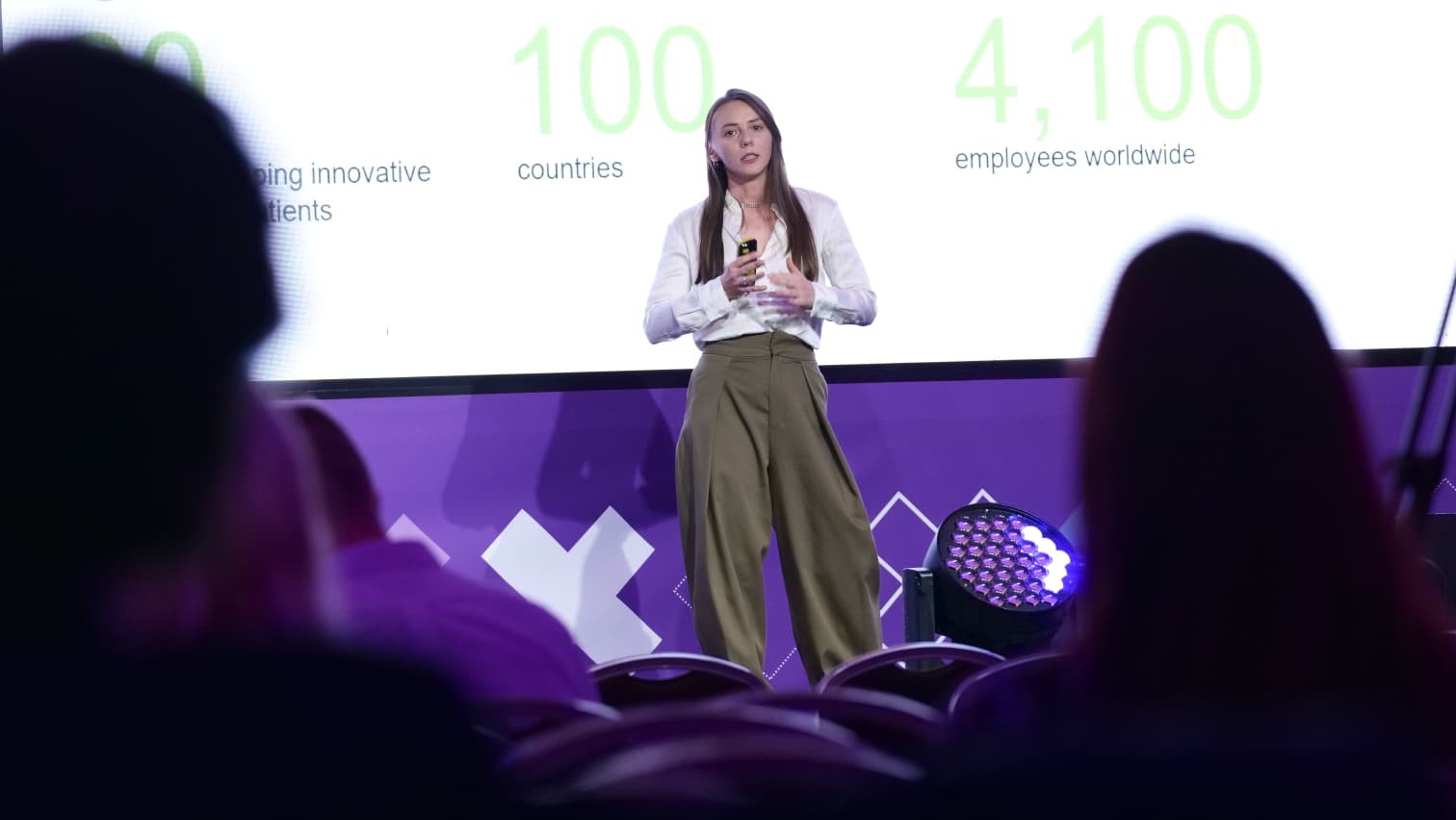
The session's core message: recurring issues in omnichannel strategy, governance, and change management — not the technology itself — are the true barriers to success.
Do HCPs Actually Want More Digital Channels?
No, HCPs don't want more digital channels, they want fewer, better-coordinated ones that respect their time.
Cristina Finazzi's session "The Human Advantage: Why HCPs Trust Congress More Than Algorithms" made this point sharply:
Despite two decades of digital investment in congress formats, physician preference for in-person, peer-to-peer engagement has remained largely unchanged, because many transformation efforts rely on "push" mechanisms that trigger resistance rather than adoption.
Similarly, Marc Ryning and Audrey Krassnitzer's "From Ferrari Fantasy to Volvo Value" session argued that ambitious, overly complex CX strategies slow growth, while reliable, consistently valuable engagement — even if less flashy — creates more meaningful impact.
How Can Pharma Companies Move From Multichannel to Omnichannel?
Pharma companies move from multichannel to omnichannel by fixing their data foundations first, aligning teams around shared outcomes, and only then layering in AI.
Several NEXT 26' sessions offered concrete paths forward:
- Standardize before you automate.
MEDICE's "Omnichannel Journey" session, presented by Matthias Krenz, Marc Schöni, and Dominik Mergler, showed how the company shifted from siloed channels to a unified, data-driven HCP engagement model — but stressed that standardizing processes and fixing data foundations had to happen before scaling AI and automation, not after.
- Unify fragmented systems, not just teams.
In "Enhancing Field Force Effectiveness using agentic AI workflows," Axtria's speakers argued that pharma's real problem isn't a lack of data or intelligence — it's execution complexity across disconnected systems. Their proposed fix: use agentic AI to unify pre-call preparation, post-call documentation, and performance coaching into a single workflow.
- Reframe roles, not just tools.
The "Field Roles: Evolution or Identity Crisis?" panel — featuring Carlos Sosa, Olivier Burgaud, Jennifer Cleall, and Mehrnaz Campbell — emphasized that MSLs, reps, and hybrid roles need to evolve into data-driven, omnichannel-fluent functions, with MSLs positioned as "evidence architects" rather than pure information deliverers.
- Measure decisions, not activity.
Multiple sessions echoed the same shift: moving from activity-based KPIs (reach, clicks, volume) to outcome-based measurement centered on real-world behavior change and decision impact, rather than internal productivity metrics.
What Role Does AI Play in Closing the Omnichannel Gap?
AI closes the omnichannel gap only when it's layered onto a coordinated foundation — bolted onto fragmentation, it just adds speed to a broken process.
Aithena co-founder Dr. William McCully summarized this directly in his NEXT 26' reflection: Teams are still struggling to get content they already have through approval, and adding an AI tool to a process no one has mapped just adds speed to a queue that doesn't move.
The panel "Why 95% of AI Projects Fail" reinforced this: the top causes of failure were unclear business needs, unrealistic expectations, poor measurement, and resistance to adoption — not the AI technology itself.
Where AI did work, panelists reported results that outperformed original expectations, with some flagship projects achieving up to 50% faster and 30% cheaper outcomes once governance and business alignment were in place.
Is Traditional Engagement Being Replaced by AI Agents?
Not entirely, the emerging model is human-AI collaboration, not AI replacement, especially for trust-dependent interactions.
In "The Sales Organization of the Future," Jiten Jain introduced an AI agent called Rep Twin, designed to extend HCP reach beyond human capacity limits — noting that reps currently spend only about 30% of their time with physicians, missing roughly 80% of potential HCPs entirely.
But the framing was additive, not substitutive: Rep Twin was positioned to add width and velocity to human rep interactions, not eliminate them, echoing the "human–AI sweet spot" theme that ran through multiple NEXT 26' workshops.
Conclusion
Orchestration, Not Channel Count, Is What Separates the Two.
The difference between omnichannel and multichannel isn't how many channels pharma uses — it's whether those channels are connected.
As NEXT 26' Dubrovnik made clear, most "omnichannel" failures trace back to fragmented data, siloed teams, and activity-based KPIs, not a lack of technology.
Fix the coordination, and the channels take care of themselves.
Read our NEXT 26 Impact Report or watch the keynote sessions on the official NEXT Pharma Summit YouTube channel for more insights in the pharma industry.
FAQ: Omnichannel vs Multichannel in Pharma
Is omnichannel the same as multichannel?
No. Multichannel means running several channels independently, while omnichannel means those channels are connected around a shared view of the HCP.
Why do most pharma omnichannel strategies fail?
Because they start with technology instead of a clearly defined business problem like unclear business needs, poor measurement, data silos, and organizational resistance.
What percentage of HCPs trust current pharma engagement?
Data shared at NEXT 26' put physician trust in pharma communication at around 20%, with satisfaction near 39%, despite heavy investment in data and AI-driven engagement tools.
Do HCPs still prefer face-to-face interaction over digital channels?
Largely yes for high-stakes decisions. Physicians continue to rely most on peer-to-peer and in-person congress interactions for clinical decision-making.
Can AI fix a broken omnichannel strategy on its own?
No. AI amplifies existing strengths and weaknesses rather than fixing them. Teams need to standardize processes and data foundations before layering in AI, or automation just speeds up a broken system.
What's the first step to moving from multichannel to omnichannel?
Aligning KPIs and unifying data across medical, commercial, and access functions is typically the starting point, since true orchestration is only possible once teams can see and act on the same customer information.